Dead Heat, Dead Money: Why a Winning Golf Ticket Sometimes Pays Out Like a Loser
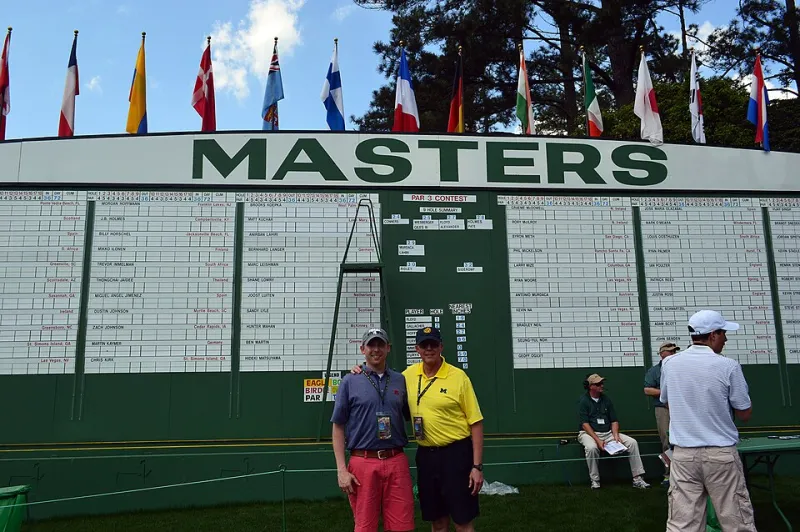
Photo: Ryan Schreiber, CC BY 2.0, via Wikimedia Commons
There is a particular kind of disappointment that only golf bettors know. Your guy finishes the tournament in a tie for ninth. You had him for a top-10 finish at +400. You mentally start spending the $500. Then the bet settles, and the payout is $250.
Nothing malfunctioned. No one cheated you. You just met the dead heat rule, and it's written in the house rules you didn't read.
What Dead Heat Actually Means
A dead heat happens when more selections tie for a finishing position than there are paying places in the market. When that occurs, most fixed-odds books apply a reduction: your stake is divided by the number of tied competitors, and the reduced stake is settled at the full advertised odds. The rest of the stake is treated as a loser.
That's the standard formula, and it applies across golf, horse racing, motorsport, and any futures market where placing positions can be shared. It's a global convention rather than an American quirk, which is why the same rule shows up whether you're betting with a stateside operator or an international book. What varies is the specific language, the thresholds, and how transparently it's disclosed.
Golf Is Where This Bites Hardest
Golf is the perfect dead-heat machine. Large fields, cut lines that bunch players together, and markets that pay a wide band of positions.
Picture a $100 bet on a top-10 finish at +400. That should return $500, stake included. Your player ties for tenth with one other golfer. Under dead heat, the stake gets halved to $50, and $50 at +400 pays $250. You won the bet and collected half of what the ticket promised.
Now imagine a three-way tie for the last paying spot. Your stake is cut to a third. A $100 ticket at +400 pays roughly $166. That is a technically correct settlement that feels indistinguishable from a loss.
The same mechanics apply to top-20 and top-5 markets, and even to outright winner markets in the rare case of a tie at the top of the leaderboard. The more positions a market pays, the more chances there are for a logjam at the boundary.
The UK and Australian convention makes this even more explicit through each-way betting, where a single wager is split into a win portion and a place portion. Take $50 each way at 20/1 with four paying places. If three players tie for fourth, the place portion of the stake is divided three ways. You collect on a fraction of a fraction, and the advertised return evaporates.
Racing: Pari-Mutuel versus Fixed Odds
Horse racing handles dead heats in two very different ways depending on the betting structure, and this is worth understanding before you cross an ocean with your bankroll.
In pari-mutuel betting, which dominates US tracks, the pool is simply split among the tied winners. Nobody applies a stake reduction, because there's no fixed price to honor. The payout per dollar drops because more tickets are sharing the same pool.
In fixed-odds racing, which is standard on most sportsbooks, the stake-division rule applies. If two horses dead heat for third in a place market paying three places, both are paying selections and your stake gets halved. Same event, entirely different settlement, decided by which type of book you used.
Futures and the Tie Problem Nobody Anticipates
Division winner markets and season-long futures carry dead heat language too, though it triggers less often. Ties in a division, shared season awards, and markets with an explicit 'Field' option all create settlement questions. The answers live in the house rules, not in the marketing copy.
A common example is a market with a designated number of paying selections where a tie straddles the final spot. If the book pays four places and three selections tie for fourth, the reduction applies. It's the same math as golf, wearing a different jersey.
Pricing the Risk Before You Click
You can't eliminate dead heat exposure, but you can stop being surprised by it.
Search the house rules for the phrase itself. Look for 'dead heat,' 'tie,' and 'reduction.' If a book doesn't address it clearly, that's a signal about the rest of its rulebook too.
Favor markets with narrow paying bands. A win-only market rarely dead heats. A top-20 market dead heats constantly, because the boundary sits in the middle of a crowded leaderboard.
Assume a haircut on long-shot place markets. If you're taking a big price on a place finish, mentally model the payout at two-thirds of face value. If the bet still looks good, it's good. If it only looks good at full face value, it wasn't good.
Size down, not up. A stake that assumes full payout on a boundary market is a stake sized on the best case. Reduce it slightly and the reduction at settlement becomes an annoyance rather than a bankroll event.
Compare rulebooks across books. Some operators pay ties in full on specific markets, or offer dedicated 'ties paid' variants. It's not common, but it exists, and it's free edge when you find it.
The Takeaway
Dead heat isn't a scam. It's a settlement convention that exists because somebody has to decide what happens when two players share ninth place. But a convention buried on page eleven of the house rules might as well be a secret, and secrets cost money.
Read the rule, price the haircut, and size accordingly. Then when your guy ties for ninth, the payout is smaller than you hoped but exactly what you planned for.